Architecture that inspires me.
Inspiration for your next architecture precedent studies: This blog features four contrasting buildings, from brutalist to contemporary, that have shaped modern design across different cultures and perspectives. Throughout history, architecture has continuously demonstrated the profound ways in which function meets creativity.
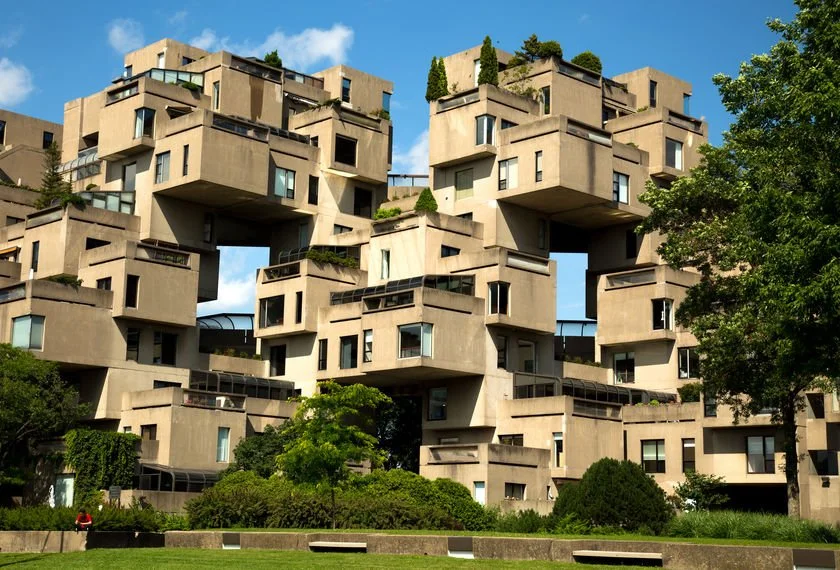
Moshe Safdie – Habitat 67, Quebec.
Built in 1967, Montreal. The brutalist approach to modern living.
Moshe Safde is an Isreali-Canadian American architect, urban planner, and author, who has designed respectable and pioneering public open spaces, centering his work towards communities for 50-years.
The ‘Habitat 67’ project was designed to adapt to dense urban city living. The design is made up of dwellings between 600 square feet to 1,800 square feet, which are the living modules, allowing up to 4 bedrooms per unit. Each living space allows access to a balcony and greenery, as well as playing areas for kids.
This striking design is a direct response to tackling populative urban cities. The stacking of units allow for views from each individual space, as well as allowing for direct sunlight, and natural ventilation.
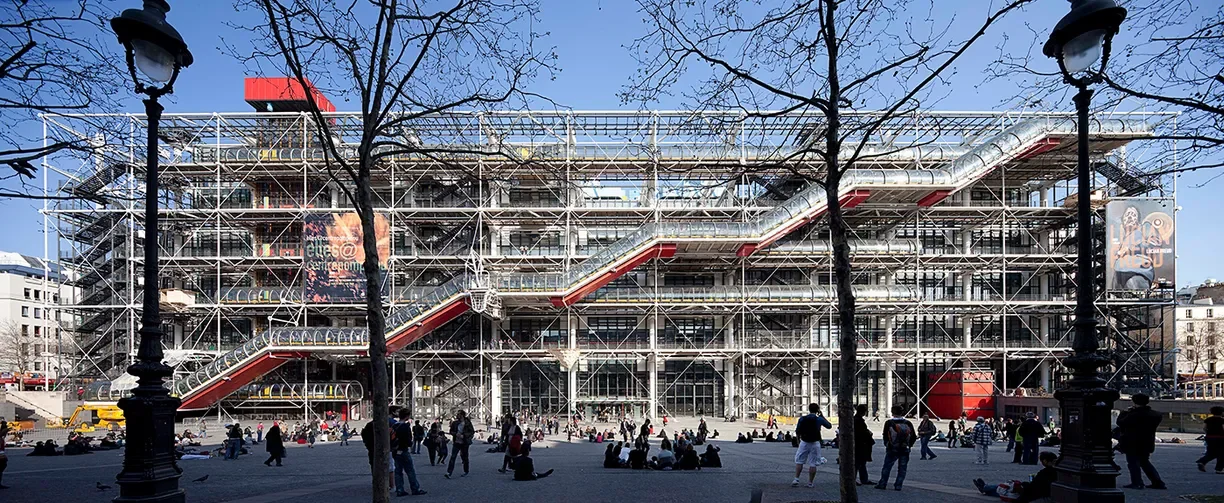
Renzo Piano – Centre Georges Pompidou, Paris.
A multi-disciplinary industrial centre, designed by Renzo Piano and Richard Rogers for an international competition in 1971, which led to the opening in 1977 after winning against 681 other entries.
This design is made out of glass, steel, and coloured tubing, which exposes the building’s skeleton. It is truly a unique approach to the public space, which hosts art exhibitions and contemporary art, in the heart of Paris. By removing the buildings structural elements, it allows for open and functional interior spaces and views out to the city.
The project was strategically designed to allow users to move through the space freely. This is done by removing the load-bearing columns (walls), which removes any elements of surprise, thus creating a direct connection to the outer landscape. The inside-out approach creates an inviting and intruiging space, which rejects the traditional approach to museum architecture.
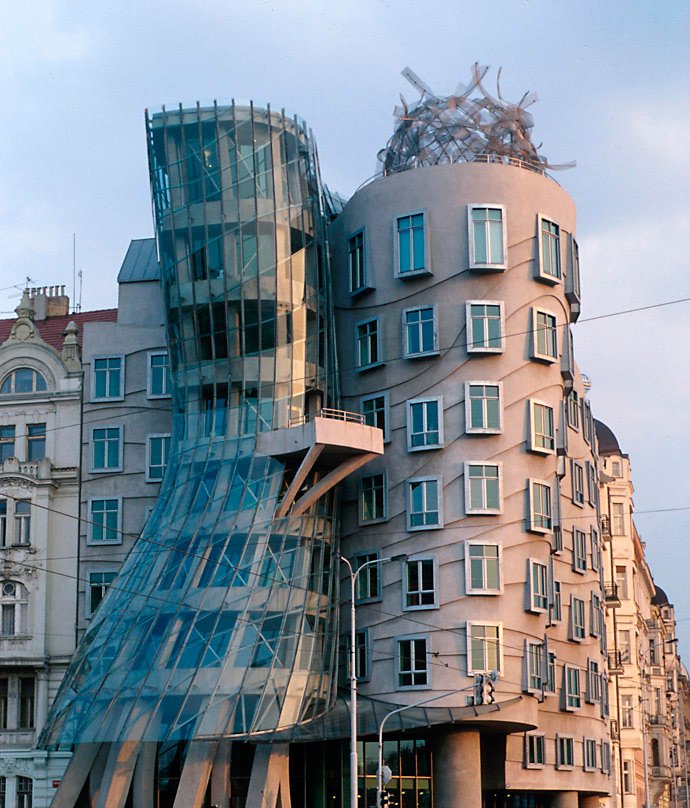
Frank Gehry - Dancing House, Prague.
The integration of bold contemporary architecture that sits within Prague’s city scape.
This deconstructivist design was built between 1992 and 1996, and was designed by Croatian-Czech architect Vlado Milunić alongside Frank Gehry, the renowed Canadian-American architect . The Dancing House symbolises a new era of democracy and cultural rebirth after the fall of communism when Vlado Havel became the first president, in 1989.
Dancing House was designed with two interconnected buildings that has contrasting materials like reinforced concrete, glass, and steel. It was designed with these materials to show the distinction between static and dynamic forms. The illusive external form was created to hide the internal spaces, which now act as functional spaces such as a contemporary art gallery and cafe on the lower levels and a hotel and roof top garden on the upper levels.
The design was heavily criticised in the earlier years due to its hyper-modern approach to Prague, which critics argued ruined the historic skyline. However, Dancing House is now an integral part of Prague and a city icon, with global recognition.
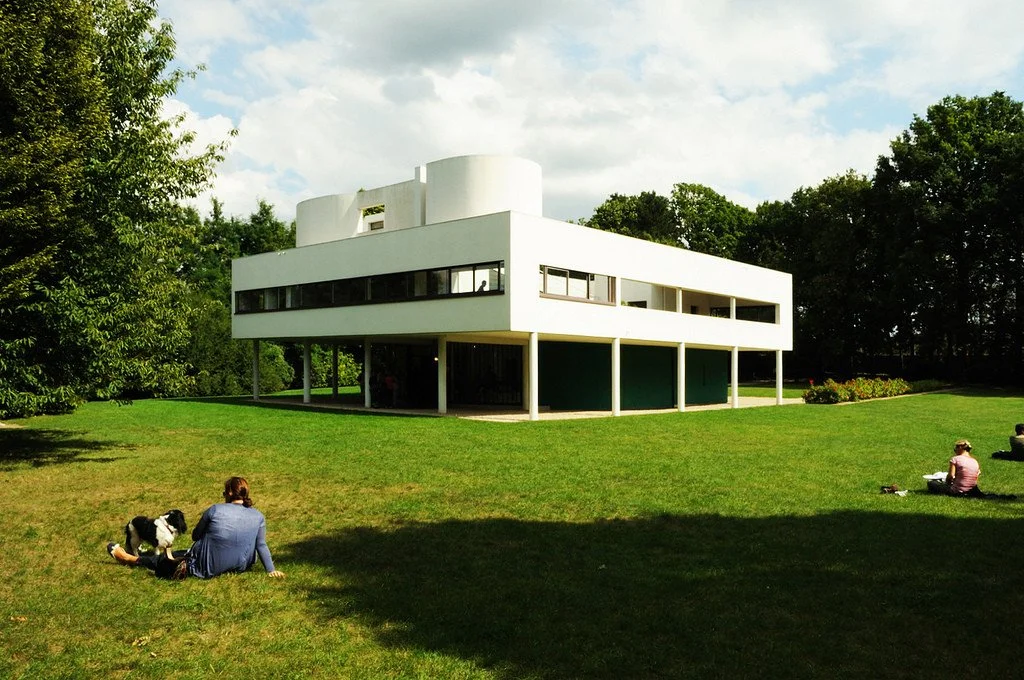
Le Corbusier – Villa Savoye.
Innovative country-side living: a 20th century modernist approach.
Le Corbusier designed the villa with a modern approach, highlighting his five key points of modern architectural technology, such as: flat roof terrace (that acts as a roof garden), open floor-plan (removal of internal load-bearing walls), ribbon windows (horizontal strips of glass that equally distributes natural sunlight), free facade (external walls acting as light material instead of structural means), and pilotis (structural columns/pillars).
The villa was then built between 1928 and 1931 using these innovative design approaches to allow users to move between the internal spaces and levels, freely – with every corner and turn offering a new perspective to the direct landscape.
The design is now famously known for changing the course of modern architecture in the 20th century due to the strategically designed spatial form that gives the illusion of a floating house, offering moments of privacy in contrast to public spaces.
Today, the villa is celebrated as a masterpiece in historic architecture and is now an official world heritage site, which is open to the public for architectural tours.